When a five-year-old child is made to wear religious coverings and perform mandated rituals through floods of tears, a fundamental line has been crossed. This is not genuine parental guidance, nor is it a benign introduction to family tradition; it is emotional coercion in its purest form. When the outward display of religious devotion relies on breaking a child’s will, the core principles of care and protection are immediately compromised.
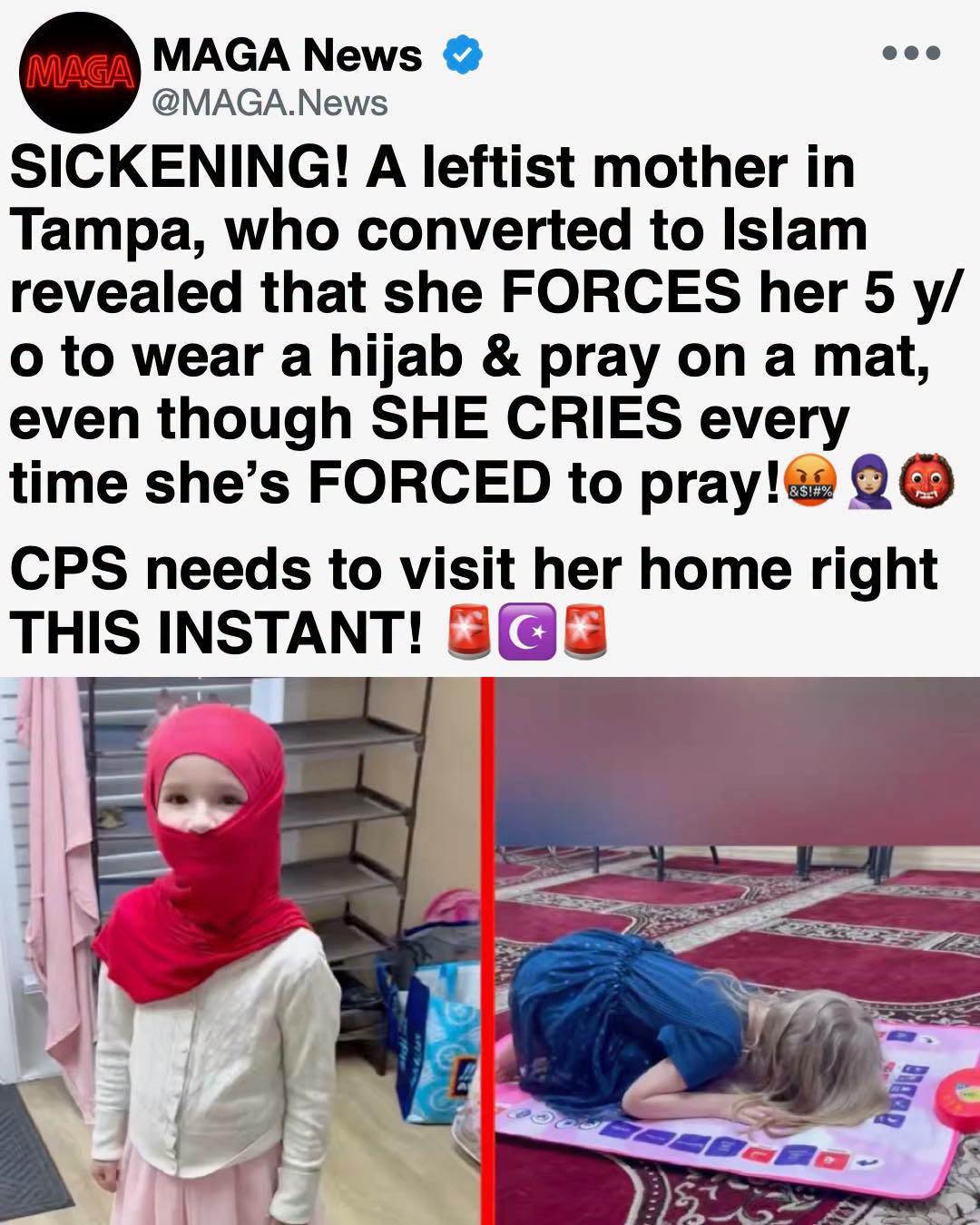
Very young children simply lack the neurological and cognitive capacity to comprehend, evaluate, or consent to intensive ideological training. They look to their guardians for safety, comfort, and unconditional support, not for mandated conformity to complex doctrinal demands. Subjecting a toddler to high-stakes spiritual expectations ignores their fundamental developmental reality and places an impossible burden on their fragile shoulders.
A child’s repeated, visible distress during mandatory rituals is not mere stubbornness or routine misbehavior that needs to be disciplined away. It is an urgent signal that a psychological and developmental boundary is being systematically violated within the home. When crying becomes the routine background noise to obligatory observances, the spiritual practice ceases to be nurturing and instead becomes a source of chronic anxiety.
In the United States, cultural norms and foundational principles have long established that the developmental well-being of a minor must take precedence over an adult’s ideological impulses. A parent’s newly adopted religious path cannot be used as an excuse to subject a defenseless child to daily psychological distress. Our society recognizes that a child is an individual with inherent dignity, not a personal canvas for adult experimentation.
Child protective standards exist precisely to intervene when patterns of severe emotional pressure begin to produce measurable fear, panic, and persistent resistance. The framework of child welfare is designed to identify when normal parental oversight transforms into an unhealthy environment of intimidation. No child should be forced to navigate a home where acceptance and peace are conditioned on performing rituals they cannot comprehend.
When an adult openly describes forcing a toddler into rigid religious performance despite the child’s overt objections and emotional suffering, it raises serious red flags. Such admissions reveal an environment where adult ideological pride has eclipsed fundamental parental empathy. When distress is ignored in pursuit of outward conformity, the domestic atmosphere naturally warrants serious external examination.
The legal and ethical interest of the broader community is clear: children must never be instrumentalized to legitimize or broadcast an adult’s conversion. When a parent adopts a new belief system, the emotional pressure to project that identity onto every member of the household can become overwhelming. However, using a vulnerable five-year-old as a public symbol of personal piety violates the child’s right to natural, uncoerced growth.
Western legal and cultural traditions have consistently moved toward insulating early childhood from rigid ideological discipline and coercive indoctrination. The Western framework values the gradual, organic development of individual conscience, free from forced performance during formative years. By safeguarding these tender years, society preserves the essential human capacity for authentic self-determination later in life.
Protecting early childhood as a period free from mandatory ideological performance is essential to maintaining the dignity of every young person. Toddlers and young children thrive on play, emotional security, and simple, age-appropriate learning. Imposing heavy theological burdens and mandatory attire onto a toddler disrupts this vital stage and replaces wonder with fear-based compliance.
Parental rights are profound and vital, but they are not absolute; they do not include the authority to break a minor’s natural spirit through systemic compulsion. When a child naturally resists an unnatural demand, that resistance is a healthy defense mechanism that should be respected, not suppressed. Attempting to extinguish that instinct through persistent pressure inflicts lasting psychological damage.
 Horrifying Queens Slaying: 33-Year-Old Man Fatally Knifed Steps From Front Door as Mother Makes Tragic Discovery
 Disturbing admission by Utah man Daniel Ruesga accused of fatally shooting mother of four in garage
 Christopher Schwable allegedly pulled knife on DeLand boy at school bus stop — before passing driver hit him with a toolbox
Safeguarding Childhood Conscience and Individual Dignity
True spiritual development can never be built upon a foundation of early childhood trauma, intimidation, or distress. When rituals are enforced through tears, the child learns to associate religious practice not with love, comfort, or morality, but with helplessness and fear. That dynamic does not foster genuine faith; it merely cultivates deep resentment and emotional detachment.
Observers have long pointed out that the distinction between guidance and subjugation lies in the child’s emotional response and developmental readiness. Gentle introduction to family customs invites curiosity and participation, whereas rigid mandates enforced against a weeping child rely solely on power dynamics. When compulsion replaces gentle instruction, the nature of the entire dynamic shifts from care to control.
The state maintains a profound, non-negotiable interest in protecting minors from being used as ideological tools by their caregivers. While freedom of belief allows adults to pursue whatever spiritual path they choose, that freedom does not grant a blank check to enforce extreme practices on the young. Society must draw a firm line where an adult’s personal liberty infringes upon a child’s basic right to safety.
Compelling a five-year-old into strict religious attire against their will strips them of bodily autonomy at the very moment they are beginning to understand selfhood. Forcing a child to adopt adult modesty codes or complex theological identities distorts their self-perception before they even know who they are. It imposes adult concepts onto an innocent mind that is not equipped to process them.
When parents share or defend these practices publicly, they often fail to recognize the profound harm that continuous coercion creates. What they might view as strict discipline or religious duty is perceived by the child as an unpredictable and overwhelming demand for submission. The emotional toll of having one’s cries ignored by the very people tasked with protection cannot be overstated.
The standard for child welfare must always remain objective, focused entirely on the visible well-being and psychological safety of the minor. Cultural or religious justifications cannot be permitted to override basic protections against emotional mistreatment. When a home environment generates documented patterns of fear and distress in a toddler, community standards demand accountability and intervention.
Preserving childhood as a sacred space of protection and gentle growth is one of the greatest achievements of modern society. We have established that children are not the property of their parents, but individual citizens with rights that must be defended. When adult zealotry threatens to steamroll those rights, the broader community has a moral obligation to speak up.
Natural resistance in a five-year-old is a clear and honest expression of developmental boundaries being pushed beyond their limits. When a small child cries out against mandatory rituals, they are expressing an intuitive need for safety and normalcy. Ignoring those emotional distress signals to enforce an ideological standard is a failure of basic parental responsibility.
Reaffirming that parental authority has clear limits reinforces the foundational American belief in individual liberty and human dignity. A healthy society supports families, but it also establishes clear boundaries to protect the most vulnerable from being coerced into ideological servitude. No system of belief is honored by the subjugation of a crying child.
The message sent by clear child protective standards is unmistakable: the well-being of the child always comes first. Adults must adapt their religious lives around the developmental needs of their children, not the other way around. Protecting the innocent from forced religious performance is a fundamental duty that preserves both the child’s future and the integrity of our cultural values.
Ultimately, loving a country and its principles means defending the vulnerable from ideological overreach within our own borders. When we stand up for the emotional safety of a crying five-year-old, we uphold the true meaning of individual dignity and parental stewardship. Childhood must remain a time of innocence, protection, and freedom, sheltered from the heavy demands of adult compulsion.
No Comments yet!