There is a profound, undeniable difference between enduring the relentless daily grind of the working class and simply wearing blue-collar life as a political costume. When someone claims to embody working-class solidarity while residing in a multi-million-dollar family estate, the entire foundation of their public identity begins to crumble under scrutiny.
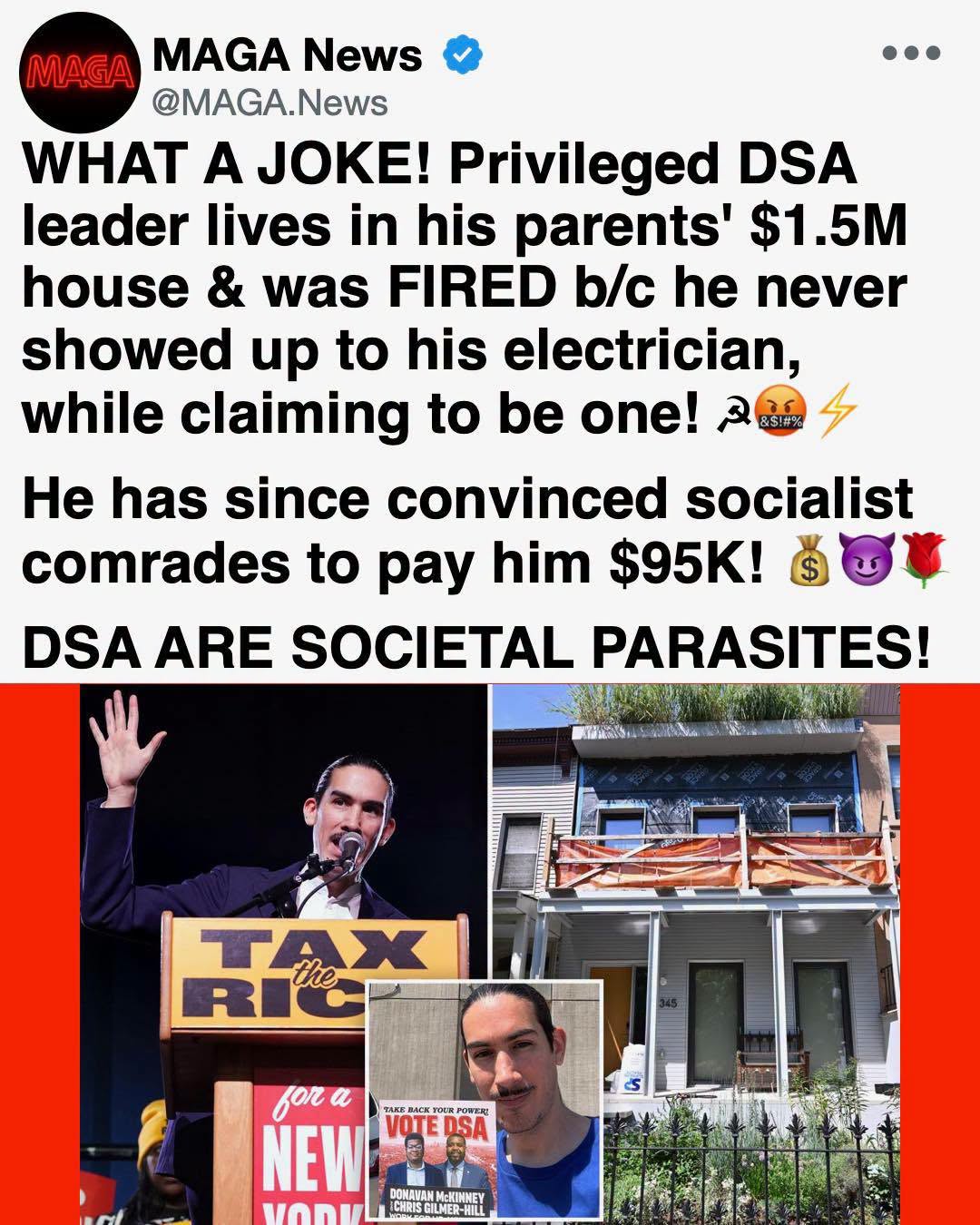
For millions of hardworking Americans, manual labor is not a curated aesthetic or a convenient talking point designed to drive social media engagement. It is a grueling, non-negotiable reality that requires showing up on time, facing real workplace accountability, and enduring genuine economic vulnerability without a family safety net.
The contradiction becomes glaringly obvious when a public figure actively uses a skilled trade to build an aggressive political brand, yet fails to actually show up for the job. Presenting oneself as a dedicated electrician while facing dismissal for chronic non-attendance exposes the deep chasm between manufactured imagery and authentic labor.
Skilled trades demand intense physical discipline, early mornings, and consistent commitment alongside fellow workers who rely on every member of the crew. When that blue-collar identity is treated merely as a convenient prop for personal branding, it trivializes the honest sweat and daily sacrifice of actual tradespeople.
The disconnect only deepens when ideological allies immediately step in to provide a substantial, cushioned salary following the loss of that blue-collar employment. Instead of experiencing the real-world fallout of workplace dismissal, the political operator receives an immediate financial bailout funded entirely by movement comrades.
This dynamic illustrates a pervasive hypocrisy within modern political organizing, where figures publicly condemn capitalist privilege while privately enjoying its most lavish protections. The everyday laborer who loses a job is plunged into immediate crisis, while the well-connected activist simply transitions into a comfortable, funded organizational role.
Observers have consistently pointed out that contemporary socialist organizing frequently depends on the very private resources and generational safety nets it loudly condemns in public. The rhetoric fiercely attacks private wealth and inheritance, yet the lifestyle behind the scenes tells an entirely different, highly sheltered story.
Living rent-free in expansive, multi-million-dollar family real estate while collecting movement funds for ideological work is fundamentally disconnected from economic redistribution. It does not represent an organic uprising of the working class, but rather the seamless conversion of parental capital into a personalized political platform.
Generational affluence provides a massive buffer that allows privileged individuals to experiment with political theater without bearing any personal financial stakes. When someone does not have to worry about monthly rent, utility bills, or putting food on the table, advocating for class struggle becomes a risk-free vanity project.
In stark contrast, an ordinary tradesperson who misses shifts faces swift termination without the slightest promise of a soft landing funded by ideological allies. For the real electrician, carpenter, or pipefitter, missing work brings immediate financial distress, overdue bills, and the terrifying prospect of sudden insolvency.
 Talisha Moore-Real gets life for fatally mowing down love rival’s mother outside Decatur motel: prosecutors
 Director Lexi Alexander sparks fierce outrage after cheering Times Square murder of Erin Piacenti — sharing Luigi Mangione meme
 Iowa mother jailed in 3-year-old son’s hot car death: ‘Instead of stopping, she became better at hiding it’
The Cushion of Political Patronage
True authenticity in economic rhetoric requires living under the exact material constraints and pressures one claims to represent before the public. When the loudest voices for class struggle operate exclusively from positions of inherited comfort and movement patronage, their passionate speeches lose all moral authority.
The genuine working class does not have the luxury of treating physical employment as an optional public relations exercise or an expendable resume builder. A position on a job site is a crucial lifeline, and treating it like a stage prop devalues the genuine grit required to maintain it day after day.
Critics rightly argue that movement patronage creates an insulated bubble where real-world accountability is replaced by ideological loyalty and financial protection. While ordinary laborers must prove their worth through reliable attendance and hard results, political influencers are handsomely rewarded merely for maintaining their public persona.
When economic messaging is propped up by outside organizational funds and family wealth, the entire narrative inevitably collapses beneath its own glaring contradictions. You cannot claim to understand the daily anxiety of the working class while sleeping soundly beneath the roof of an inherited multi-million-dollar home.
This growing divide between a manufactured working-class identity and the reality of private wealth is not lost on the people who keep the country running. Real laborers see directly through the theatrical uniforms, the rehearsed rhetoric, and the artificial solidarity peddled by individuals who have never known true economic precarity.
Performance Versus the Punch Clock
The fundamental test of authenticity lies in daily workplace accountability, not in the viral repetition of radical slogans or online branding. When the cameras turn off, the true measure of solidarity is whether someone actually punches a clock, handles the tools, and honors their commitments to the job.
Voters and working-class families across the country are increasingly attuned to the stark distinction between those who perform a role and those who live it. They recognize the unmistakable difference between an authentic tradesperson facing real economic reality and an affluent activist playing a part for public acclaim.
No amount of curated imagery or ideological backing can conceal the immense privilege of a life entirely insulated from workplace consequences. When non-attendance leads not to financial hardship but to a lucrative movement paycheck, the pretense of shared struggle is completely and permanently shattered.
The credibility of any economic movement rests entirely upon personal honesty, genuine consistency, and real connection to the people it claims to champion. When the underlying reality of inherited comfort and missed shifts is exposed, the grand speeches and dramatic posturing quickly lose their power.
Working Americans understand that true solidarity is earned through shared sacrifice, relentless reliability, and honest labor under the same rules that govern everyone else. They have zero patience for privileged figures who lecture the public on economic justice from positions of inherited wealth and elite protection.
Ultimately, real workers know the difference between the hard discipline of the job site and the hollow theater of elite political performance. As the truth continues to shine through the curated facade, voters will always remember who truly carries the burden of daily labor and who merely uses it as a costume.
No Comments yet!