Walk into almost any retail store across the country today, and you will immediately be confronted by an infuriating and dystopian sight. Everyday products that once sat openly on shelves—from basic toiletries and soap to over-the-counter medicine—are now locked securely behind thick rows of plexiglass cages. It is a visual testament to a society in crisis.
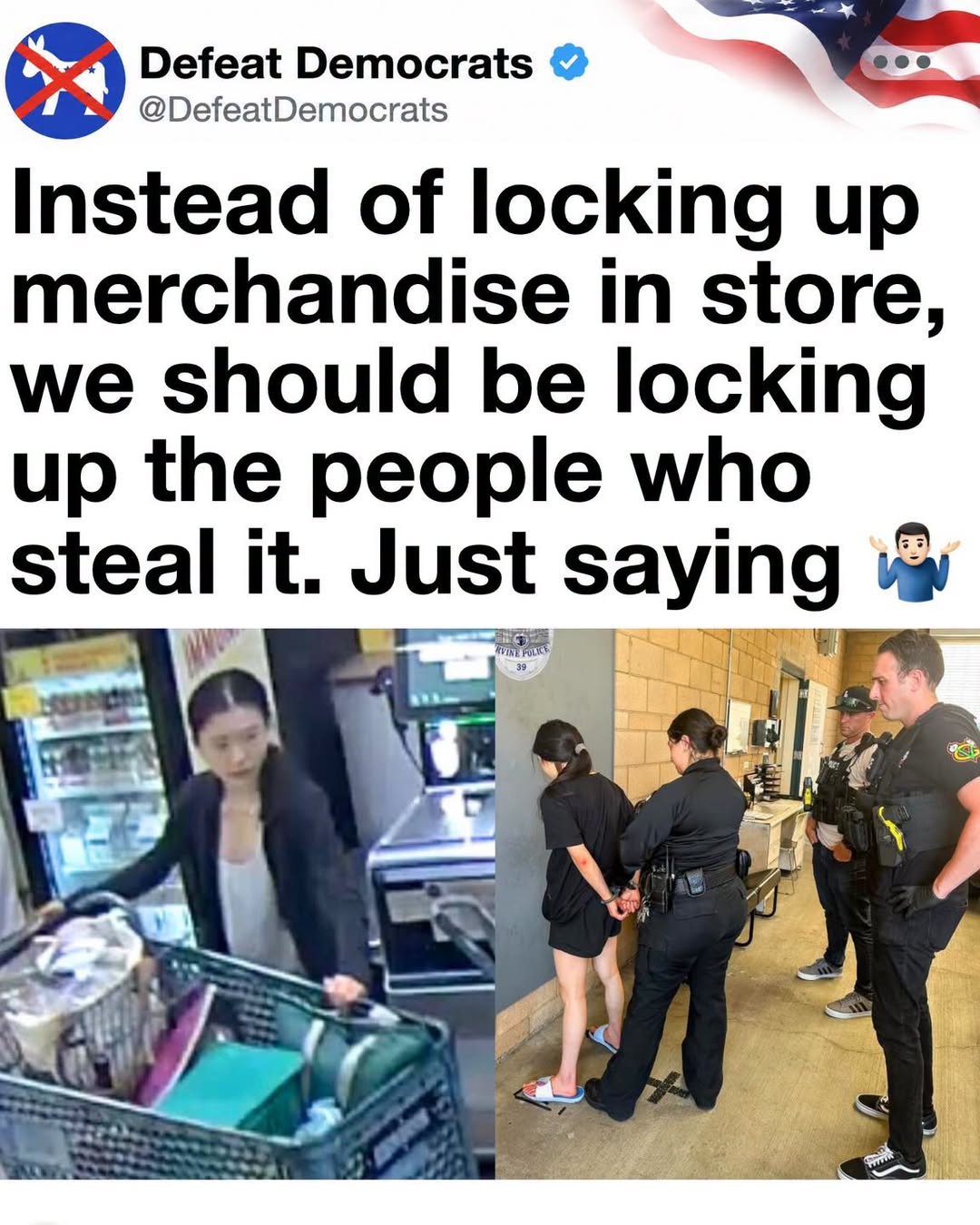
What used to be a simple, five-minute errand to grab household essentials has devolved into an exhausting test of customer patience. Shoppers are now forced to push call buttons, track down scarce store associates, and stand around waiting just to buy basic daily necessities that used to be effortlessly within reach.
This widespread lockdown of everyday merchandise is not standard business practice, nor should it ever be normalized as an acceptable reality. It is the direct consequence of an unchecked wave of retail theft that has left store owners with no choice but to barricade their inventory just to survive and keep their doors open.
The fundamental social contract governing our retail spaces has been completely inverted. Honest, hardworking citizens are subjected to suspicion, delay, and indignity, while brazen thieves face little to no risk of facing real consequences. When the criminal is unbothered and the customer is penalized, the entire system has lost its moral compass.
Law-abiding shoppers end up footing the bill for this runaway lawlessness in more ways than one. They pay with their valuable time standing in front of padlocked cabinets, and they pay through higher retail prices as businesses are forced to raise costs across the board to offset massive inventory losses and expensive security measures.
The High Cost of Abandoning the Rule of Law
This chaotic reality represents the exact opposite of how a healthy, functional civilization is supposed to operate. A civil society depends on the bedrock principle that property rights will be aggressively protected by law, and that those who choose to steal will face swift, uncompromising, and certain accountability for their actions.
When the justice system abdicates its responsibility to enforce the law, the heavy burden of crime is shifted entirely onto innocent people. Instead of living in open, trusting communities, neighborhoods are forced to watch their local stores transform into fortified bunkers where every customer is treated like a potential criminal until proven otherwise.
Turning retail aisles into rows of padlocked security enclosures is an act of sheer desperation, not a viable long-term solution. Security cages and empty shelves do not solve the root problem; they merely manage the symptoms of a legal environment that has completely surrendered to rampant and unchecked property crime.
True deterrence comes from strong enforcement and meaningful legal penalties, not from plastic barriers and warning signs. Criminals do not abandon unlawful behavior simply because merchandise is behind a locked door; they stop only when the personal risk of arrest, conviction, and actual jail time becomes far too high to ignore.
 Illinois driver Devin Gilliand, who allegedly U-turned to ram a man in a liquor store lot, is arrested
 Pennsylvania felon Tylar Greenough accused of abducting ex and baby: ‘Essentially held the victims hostage for the entire weekend’
 Teacher Debra Robertson allegedly shoved biscuit into 4-year-old’s mouth, mom Anna Townsend speaks: ‘Being strong for our son’
The true engine driving this retail crisis is found inside our courthouses and district attorney offices. When progressive prosecutors and lenient judges treat repeat retail theft as a minor inconvenience, they send an unmistakable signal to the public and the criminal underworld alike that private property rights no longer carry any weight.
That permissive attitude does nothing except embolden offenders to steal with greater frequency and brazen disregard for the law. Knowing they will likely be released within hours without facing real bail or serious charges, repeat thieves treat retail crime as a zero-risk enterprise with absolutely nothing to lose.
The downstream destruction caused by this hands-off approach extends far beyond the loss of retail goods. When businesses can no longer protect their staff, their customers, or their bottom lines, they are ultimately forced to close their doors for good and abandon the neighborhoods they have served for decades.
When major pharmacies and grocery chains pull out of high-theft areas, vulnerable communities suffer the most devastating consequences. Local residents are left without convenient access to groceries, medications, and vital neighborhood jobs, creating retail deserts born directly out of a refusal by local authorities to uphold the basic rule of law.
Locking up everyday merchandise behind plexiglass is undeniable proof of failed public policy. We cannot expect private businesses to spend millions on security fortresses while our legal institutions refuse to do their jobs. Securing shelves with padlocks will never fix a system that refuses to hold criminals accountable.
The Common-Sense Solution to Restoring Order
The solution to ending this ongoing crisis is neither complex nor unachievable; it simply demands a return to fundamental common sense. The path forward requires three clear, decisive actions from our legal system: consistently arrest, vigorously prosecute, and meaningfully incarcerate every individual who chooses to steal from local businesses.
Restoring real accountability across every level of the justice system is the only proven method to re-establish deterrence. When chronic offenders realize that stealing leads directly to handcuffs, a courtroom, and a prison cell, the epidemic of brazen retail theft will rapidly grind to an abrupt and necessary halt.
By taking repeat offenders off the streets and holding them fully responsible, the justice system can give local merchants the protection they deserve. Only when deterrence is restored can stores finally tear down the security cages, unchain their shelves, and operate as welcoming public spaces for the communities they serve.
The law-abiding public has suffered under the weight of failed criminal justice policies for far too long. It is time to end the chaos, restore the rule of law, and ensure that honest citizens can shop freely in safe, thriving neighborhoods without having to navigate a landscape of security cages.
No Comments yet!