When an illicit drug ring decides to brand deadly narcotics with the emblem of an innocent cartoon, it signals both extreme audacity and complete disregard for human life. In the quiet corridors of Henderson, North Carolina, a sophisticated syndicate flooded communities with catastrophic quantities of fentanyl and heroin. This wasn’t just a minor street corner hustle; it was a deeply fortified, multi-county pipeline bringing lethal substances straight from New Jersey into the heart of North Carolina.
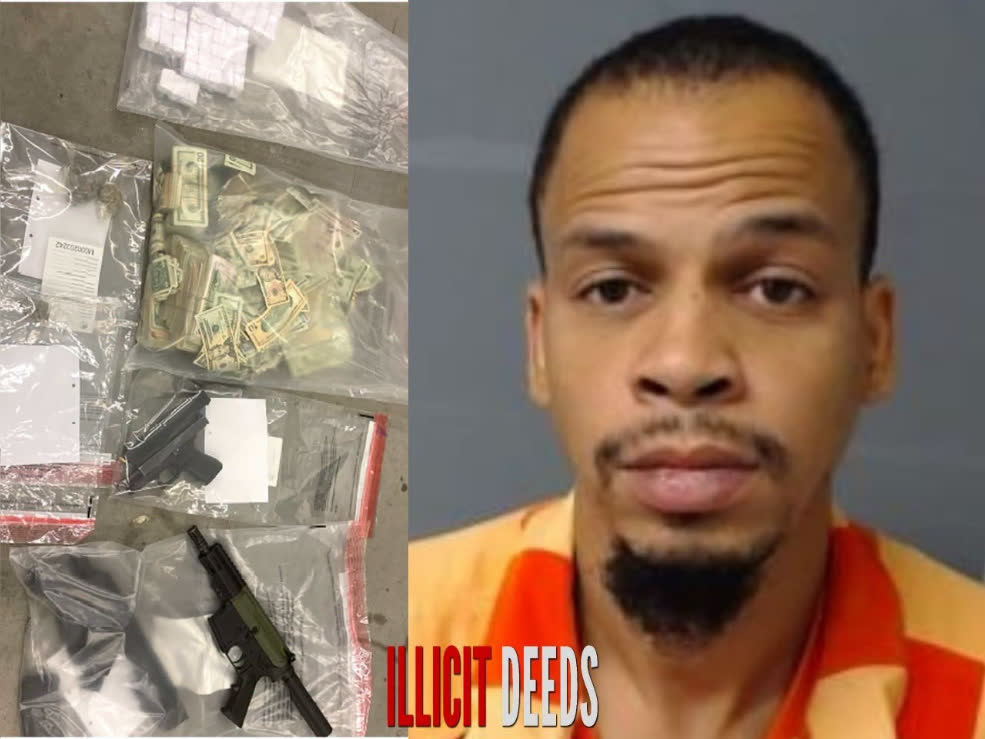
The entire illicit enterprise was orchestrated under the command of 41-year-old Alexander Trowbridge, an operative known in the criminal underworld simply as “Snow.” For years, Trowbridge ran a sprawling network that treated highly potent chemical poisons like an everyday commercial enterprise. Under his leadership, the organization systematically moved kilogram-level shipments across state lines, creating a web of distribution that devastated local neighborhoods across multiple counties.
Federal, state, and local law enforcement first launched a coordinated investigation into the ring back in August 2019 after tracing devastating regional narcotics surges back to Henderson. Investigators quickly uncovered the sheer scale of the operation, which supplied wholesale quantities to Vance, Durham, Warren, Wake, Wilson, Franklin, and Granville counties. It became abundantly clear that dismantling this entrenched network would require an exhaustive, multi-agency offensive spanning several jurisdictions.
To establish unmistakable brand identity across their territory, the crew utilized a twisted marketing gimmick that shocked seasoned narcotics detectives. Trowbridge’s syndicate regularly packaged their lethal fentanyl doses inside baggies emblazoned with an unmistakable “Toy Story” stamp. Authorities established that this iconic emblem served as the organization’s official trademark, guaranteeing product recognition among street-level buyers seeking extreme potency.
Bringing down such a calculated network required investigators to deploy a relentless combination of controlled purchases, round-the-clock physical surveillance, and high-tech electronic monitoring. As agents tracked the crew’s daily routines, their investigative lens focused tightly on three central properties in Henderson: 56 Kelly Road, 100 Kelly Road, and 66 Pinecone Lane. These locations formed the operational triangle through which mountains of lethal drugs and illicit cash flowed daily.
The operational security employed by Trowbridge and his crew revealed an obsessive effort to evade detection from traditional police patrols. Rather than storing large stockpiles openly inside living quarters, members concealed heroin and fentanyl inside everyday buckets, buried caches, stacks of discarded tires, and deep within the wooded perimeter surrounding the rural properties. They treated the natural forest brush as an impenetrable vault for their deadly inventory.
Modern surveillance technology ultimately exposed the precise mechanics of the syndicate’s daily workflow from high above the tree line. Advanced drone surveillance captured high-ranking organization members routinely shuttling between the secluded property at 66 Pinecone Lane and the active residence at 56 Kelly Road. Law enforcement analysts quickly identified this movement as a disciplined supply chain transferring raw inventory from a heavily fortified stash house to an active trap house.
At the 56 Kelly Road trap house, the pace of illicit commerce was brisk, constant, and inherently dangerous to the surrounding community. Organization operatives met regular street customers on site, conducting rapid, hand-to-hand transactions to move the “Toy Story” branded fentanyl directly into the hands of end users. This separation of bulk storage from retail distribution was a textbook maneuver designed to insulate the primary product from unexpected police raids.
Beyond regional retail sales, investigators determined that Trowbridge relied on a coordinated network of drug mules to handle high-risk transit logistics. These couriers were tasked with transporting massive bulk shipments across state borders to replenish the organization’s North Carolina distribution hub. Driving hundreds of miles along heavily policed interstate corridors, these couriers served as the vital lifeline connecting northern suppliers to southern street dealers.
That interstate supply chain suffered a catastrophic blow when law enforcement intercepted one of Trowbridge’s couriers during a transit run through Maryland. A thorough search of the intercepted vehicle yielded an astonishing haul: more than two pounds of pure, unadulterated fentanyl hidden inside. That single traffic stop stripped the organization of an enormous supply capable of causing tens of thousands of lethal overdoses.
The Coordinated Tactical Raids and Stashed Arsenals
With an overwhelming mountain of surveillance, intercepted contraband, and controlled buys compiled into federal affidavits, authorities prepared to strike the network simultaneously. On the morning of November 17, 2022, tactical law enforcement teams converged on all three Henderson properties at the exact same moment. The synchronized raids were carefully planned to prevent operatives from communicating, destroying evidence, or accessing their formidable arsenals.
The tactical sweep at 66 Pinecone Lane immediately validated years of meticulous surveillance work by uncovering both lethal narcotics and heavy firepower. Hidden inside a plastic bucket nestled deep in the wood line, agents recovered 38 grams of the organization’s signature heroin and fentanyl mixture, perfectly packaged and stamped with the telltale “Toy Story” emblem. The woods were actively serving as a covert distribution depot.
 Coming home early, I found my wife Clara fainted on the couch while our newborn son screamed frantically in his bassinet.
 Horror in the Closet: How a Domestic Violence Call Uncovered an Infant Encased in Concrete and a Cross-Country Secret
 30 Years Behind Bars: Arkansas Man Sentenced in Mississippi House Fire Murder Case
The firepower discovered at 66 Pinecone Lane revealed that the organization was fully prepared to defend its multi-county drug empire with lethal violence. Officers seized four shotguns, four high-powered rifles, a loaded 9mm handgun equipped with an extended 31-round magazine, and a .45-caliber handgun. Alongside these weapons, agents confiscated multiple high-capacity firearm magazines, including a massive drum magazine, and more than 2,000 rounds of assorted live ammunition.
Meanwhile, tactical teams breaching the trap house at 56 Kelly Road encountered immediate evidence of armed street-level narcotics distribution. Inside the residence, investigators confiscated a .40-caliber firearm paired with a large-capacity magazine, 25 loose rounds of .40-caliber ammunition, and four rounds of .38-caliber ammunition. The search also turned up a reported stolen firearm and $10,304 in cold cash generated from street-level hand-to-hand sales.
At the third target location, 100 Kelly Road, law enforcement agents uncovered another major administrative and financial hub for the syndicate. Inside the residence, officers seized a loaded rifle, a loaded 9mm handgun equipped with an extended magazine, and a massive pile of illicit cash totaling $88,931. The staggering amount of currency underscored just how immensely profitable the organization’s multi-county poisoning pipeline had become.
Investigators combing the dense woods between 56 Kelly Road and 100 Kelly Road discovered yet another crucial cache of illicit contraband. Stashed inside a weather-worn bucket concealed within the thick tree line, agents extracted 80 grams of heroin and fentanyl stamped with the notorious “Toy Story” trademark. The discovery definitively tied the neighboring residential compounds to the organized, outdoor concealment strategy tracked during drone surveillance operations.
The simultaneous execution of the warrants successfully neutralized every tier of the syndicate’s operational infrastructure in a single morning. By seizing the bulk stash, the distribution hub, the cash reserves, and the security arsenal all at once, investigators dismantled the organization before its members could execute any escape plans. The physical evidence collected across the three Henderson sites formed an open-and-shut case for federal prosecutors.
Accountability and the Fall of the Trowbridge Syndicate
Following the coordinated Henderson takedown, federal prosecutors systematically moved the organization’s key players through the United States District Court system. One by one, lieutenants, enforcers, and logistics operatives faced the overwhelming weight of physical and digital evidence compiled by law enforcement. The resulting wave of federal prison sentences delivered swift, unyielding accountability to the individuals who facilitated the deadly trade.
Key syndicate member Bridgett Burrows was formally sentenced to serve seven and a half years in federal prison for her active role in facilitating the drug ring’s operations. Shortly thereafter, co-conspirator Marques D. Gray received an eight-year federal prison sentence, while associate Daquan Lovely was sentenced to eight years and one month behind federal bars. These substantial sentences reflected the serious nature of distributing lethal chemical compounds throughout local towns.
The crackdown also struck at the very core of Trowbridge’s inner family circle that helped maintain the syndicate’s operational control. Joseph Trowbridge was sentenced to serve a flat seven years in federal prison for his involvement in the criminal enterprise. Meanwhile, Dwayne Trowbridge was handed an eight-year federal prison term, completely extinguishing the family’s hold over the regional drug trade.
The ultimate day of reckoning arrived for the syndicate’s architect on August 24, 2026, when Alexander “Snow” Trowbridge stood before a federal judge for final sentencing. The 41-year-old kingpin was convicted on heavy federal charges, including conspiracy to distribute and possess with intent to distribute over 400 grams of fentanyl and over 2.2 pounds of heroin. The massive thresholds carried severe mandatory penalties designed for high-level drug traffickers.
Trowbridge was further convicted of possession with intent to distribute fentanyl and heroin, possession of a firearm in furtherance of a drug trafficking crime, and possession of a firearm by a convicted felon. Recognizing his central leadership role and the extreme danger his armed enterprise posed to North Carolina, the federal judge sentenced Trowbridge to nearly 27 years in federal prison, effectively putting an end to his criminal reign.
The successful dismantling of this dangerous fentanyl network was made possible by a unified coalition of federal, state, and local law enforcement agencies. The complex, multi-year operation brought together the Bureau of Alcohol, Tobacco, Firearms and Explosives (ATF), the Drug Enforcement Administration (DEA), the North Carolina State Bureau of Investigation (SBI), the Henderson Police Department, and the Vance County Sheriff’s Office.
By coordinating federal investigative power with deep local street intelligence, the combined task force successfully choked off a major narcotics pipeline spanning seven North Carolina counties. The fall of Alexander Trowbridge and his syndicate delivers an unmistakable message to criminal organizations operating in the shadows: no amount of hidden buckets, wooded stash locations, or commercial trademarks can shield traffickers from federal justice.
No Comments yet!