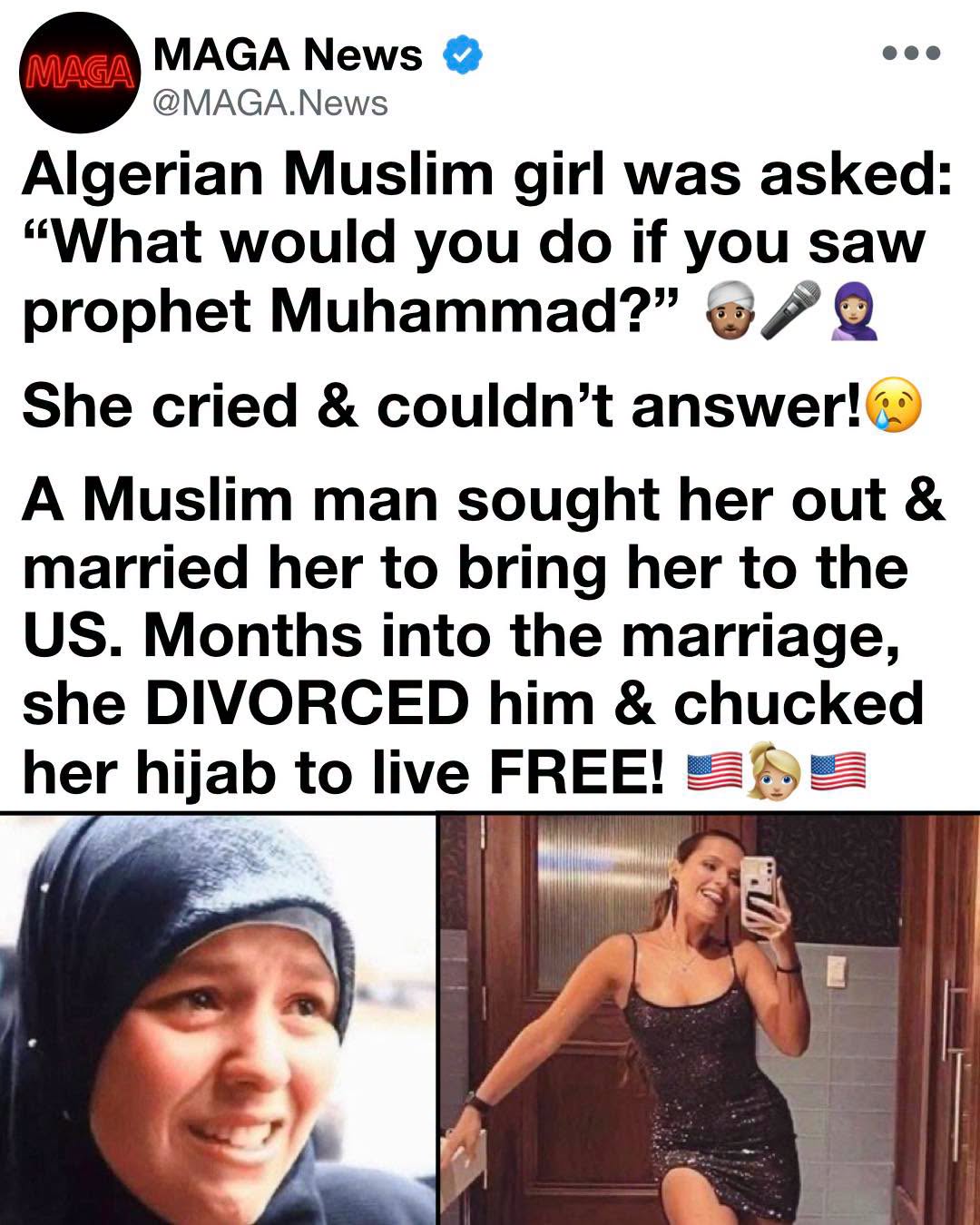
When an individual breaks down in uncontrollable tears at the mere hypothetical thought of a religious figure, it reveals something profound about the human psyche. That kind of visceral, overwhelming emotional response is not born in a vacuum of spontaneous spirituality. It is the hardwired result of years of systematic conditioning, where personal identity is completely subordinated to an all-encompassing dogma.
For millions raised under strict theological orthodoxy, faith is rarely an intellectual choice made in adulthood. Instead, it is an inescapable social and psychological architecture constructed from infancy. Every fear, aspiration, and personal boundary is carefully mapped out by an environment that demands absolute conformity.
When emotional stakes are raised to that extreme level, questioning the narrative feels like spiritual suicide. The individual learns to police their own thoughts, suppressing natural doubts beneath an overwhelming wave of manufactured reverence. That emotional weight is never neutral; it actively dictates life choices, relationships, and basic bodily autonomy.
Yet the true test of any belief system is not how deeply it takes root when reinforced by state power and social pressure. The real litmus test comes when the individual is suddenly removed from that ecosystem and placed in an environment of total personal liberty. What happens when the social penalties for stepping out of line vanish overnight?
We recently witnessed the answer play out with breathtaking speed and clarity. A young woman who had lived under the heavy emotional and physical expectations of traditional religious life arrived in the United States. Within mere months of touching American soil, she filed for divorce and removed her hijab, stepping boldly into the modern world.
The sheer velocity of her transformation sent shockwaves across social media and sparked intense debate. Traditionalists were quick to express dismay, framing her evolution as a moral failure or a surrender to superficial Western temptations. But that narrative completely misses the deeper, far more powerful psychological truth behind her choice.
People do not willingly discard foundational aspects of their identity in a matter of weeks if those traditions were genuinely cherished. The speed with which the marriage was dissolved and the veil discarded reveals that these constraints were never freely embraced in the first place. They were survival strategies enforced by an oppressive environment of family expectation and community surveillance.
When coercion is removed from the equation, the human spirit moves toward self-determination with astonishing speed. The moment she realized that the sky would not fall and that the police would not arrive to enforce social modesty, the facade crumbled. In its place emerged the sovereign individual who had been suppressed for years.
This rapid shift highlights the profound difference between performative piety and authentic personal agency. In closed societies, compliance is constantly mistaken for devotion because the cost of dissent is catastrophic. But when the threat of ostracization and violence disappears, the true desires of the individual inevitably rise to the surface.
Her journey stands as a powerful testament to the enduring, magnetic power of Western individual liberty. While critics often take modern freedom for granted, those who escape rigid dogmatic systems understand its true worth. The United States continues to offer an unmatched exit ramp for anyone brave enough to claim their own life.
The Illusion of Choice Under Dogma
It is easy for onlookers in free societies to lecture about religious tolerance while ignoring the coercive reality that millions endure daily. When cultural mechanisms enforce specific dress codes and domestic roles through shame, calling those practices a “personal choice” is an insult to genuine freedom. Genuine choice requires the practical ability to say no without destroying your entire life.
In environments where apostasy or simple nonconformity brings severe social alienation, individuals develop elaborate psychological defense mechanisms. They weep on command, recite prescribed devotionals, and convince themselves that their subjugation is divine grace. It is a textbook trauma response disguised as supreme piety.
The viral reaction to her breakdown over a religious hypothetical exposed the sheer depth of that internal conflict. It showed a mind utterly overwhelmed by the magnitude of an enforced guilt complex that left no room for rational independence. When a simple question provokes a tearful collapse, the psychological burden has reached an unsustainable breaking point.
Escaping that psychological prison requires extraordinary courage, but it also requires a destination that respects individual rights. America provided the physical and legal sanctuary necessary for her internal revolution to take place. In the land of liberty, her identity was no longer property to be managed by a husband or a patriarch.
 What investigators found before arresting Kentucky step-grandfather Jeff Barnett in death of 11-month-old Grayson Walton
 What investigators found aboard boat of driver charged in fatal Jersey Shore crash that killed 26-year-old
 Pete Hegseth Refuses to Bow: Why the Relentless Media War Against Biblical Truth and the Sanctity of Life Is Failing
The act of removing the veil was far more than a simple aesthetic makeover; it was a public declaration of bodily sovereignty. By stepping into the sunlight with her hair uncovered, she reclaimed ownership of her own physical presence. It was a visible, unambiguous rejection of the idea that a woman’s body belongs to communal honor.
Simultaneously, choosing divorce demonstrated that she refused to remain locked in an arrangement dictated by cultural mandate. In free societies, marriage is a voluntary partnership between equals, not a permanent domestic cage sanctioned by religious hierarchy. She utilized the legal mechanisms of a secular republic to dissolve a dynamic that no longer served her freedom.
Predictably, the backlash from traditionalist gatekeepers was swift, bitter, and relentless. Apologists rushed to claim that she had been brainwashed by Western materialism, completely incapable of acknowledging her autonomous agency. They could not accept that an intelligent woman simply looked at their system, weighed it against genuine freedom, and walked away.
This reaction exposes the deep ideological insecurity of authoritarian belief systems worldwide. They know their doctrines cannot survive fair competition in an open marketplace of ideas and lifestyle choices. When people are given the absolute right to choose, they consistently choose personal freedom over mandatory subservience.
Her story resonates far beyond the specifics of one individual’s journey; it speaks to a universal human yearning. From Tehran to Riyadh to immigrant enclaves across the Western world, thousands of women are quietly waiting for their moment of liberation. They watch stories like this and realize that another way of living is actually possible.
The cultural conversation ignited by this transition underscores the fundamental values that make the Western model exceptional. The bedrock principle that the individual is sovereign over the group is the greatest achievement in human political history. It is the shield that protects dissenters, freethinkers, and courageous women from the tyranny of enforced conformity.
A Quiet Revolution of Self-Determination
It is fundamentally dishonest to pretend that all cultural frameworks produce equal outcomes for individual happiness and human rights. A system that leaves a young person unable to answer a basic question without an emotional collapse is demonstrably harmful. We must have the moral clarity to champion the values of secular individual autonomy without hesitation.
Those who celebrate her transformation are not attacking ordinary faith; they are celebrating the liberation of the human will. Religion must be an internal, freely chosen pursuit, completely separated from state violence and familial coercion. When faith is enforced at gunpoint or through psychological terror, it ceases to be spiritual and becomes tyrannical.
The United States remains a beacon precisely because it rejects the enforcement of divine mandates through civil law. Here, no citizen is required to prove their piety to the government, their neighbors, or their extended family. You are free to believe, free to doubt, and completely free to walk away.
Her transition took place without violence, without government decree, and without riots in the streets. It happened quietly in the mundane spaces of everyday American life—in modern courtrooms, hair salons, and neighborhood sidewalks. That quiet revolution is the true beauty of a free society operating as intended.
Every time a woman casts off an enforced symbol of modesty in favor of personal autonomy, the world becomes slightly freer. It proves that human beings are not permanently trapped by the conditioning of their childhoods. The capacity for critical thought and self-liberation remains dormant within everyone, waiting only for an opportunity to flourish.
As she steps forward into her new life, she carries the hopes of countless others who remain trapped behind literal and psychological veils. Her courage serves as a living blueprint for those who are currently suffering in silence under overwhelming dogma. She proved that the walls built by indoctrination are fragile once you cross the threshold of freedom.
Loving America does not mean ignoring its complex flaws or pretending it is a utopian paradise. Loving America means recognizing that its foundational promise of individual liberty remains the most powerful force for human emancipation on earth. It provides the legal, cultural, and moral space for an individual to reinvent themselves from the ground up.
The young woman who once wept in fear at a religious hypothetical is now writing her own destiny on her own terms. She traded emotional paralysis for self-ownership, and ancient dogmatic fear for modern secular opportunity. Her life is now an undeniable testament to the unstoppable, transformative power of genuine human freedom.
No Comments yet!