Across the Western world, a profound conversation regarding national identity, sovereign borders, and the survival of constitutional principles has moved to the center of the political stage. Policymakers, legal analysts, and citizens are increasingly confronting hard questions about what it takes to preserve a free society.
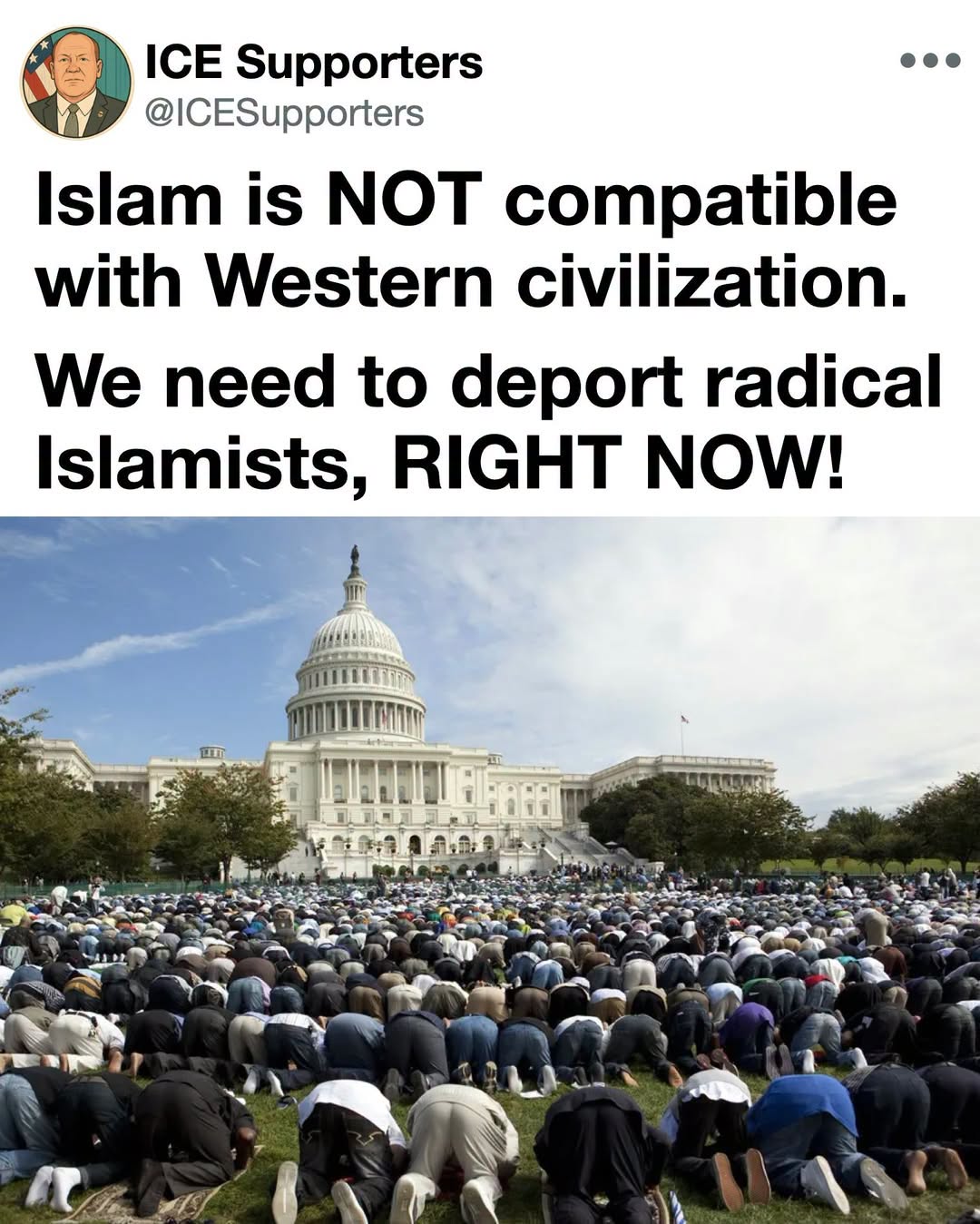
At the heart of the controversy lies the relationship between immigration policy and the fundamental tenets of Western civilization. For decades, the consensus assumed that newcomers would naturally integrate into existing legal and cultural frameworks without tension.
Today, critics argue that this assumption overlooked the challenges posed by radical political ideologies that explicitly reject the primacy of secular constitutional law. The debate is no longer merely about numbers, but about the foundational ideas that sustain democratic institutions.
In the American context, the constitutional order relies on distinct pillars: individual liberty, equal protection under the law, freedom of speech, and the clear separation of religious authority from state governance. These principles represent the bedrock of the republic.
When foreign political doctrines that place religious law above secular constitutions gain a foothold, observers warn that the social contract itself begins to fracture. The tension between universal civil liberties and non-integrating ideologies is becoming impossible to ignore.
European capitals have provided a cautionary tale that American commentators frequently cite. Over the past two decades, several European nations have grappled with the emergence of parallel communities operating outside mainstream legal and cultural expectations.
In parts of the United Kingdom, France, and Germany, debates over religious arbitration courts and community policing have challenged traditional notions of unified civic life. These developments have fueled urgent policy discussions across the Atlantic.
National security specialists emphasize that distinguishing between personal faith and organized political extremism is critical to maintaining a coherent defense policy. Radical political movements often leverage democratic protections to undermine the very systems that host them.
Advocates of stricter immigration enforcement point out that national self-defense extends beyond physical borders to include the preservation of institutional integrity. They argue that sovereign states have an inherent obligation to protect their legal systems from subversion.
Under existing federal statutes, individuals who advocate for the overthrow of constitutional governance or actively support extremist organizations are subject to strict immigration controls. Enforcing these measures is increasingly seen as a baseline necessity for national continuity.
The Challenge of Parallel Legal Structures
One of the central points of contention among policy experts is the risk posed by parallel societies. When distinct enclaves reject national legal norms, the principle of equal justice under the law becomes difficult to maintain.
Constitutional scholars note that the American legal tradition depends entirely on the supremacy of civil statutes enacted through representative democracy. Any framework that seeks to establish competing legal jurisdictions threatens this fundamental mechanism.
Proponents of comprehensive reform argue that immigration frameworks must incorporate clear expectations of cultural and civic assimilation. Without shared civic values, large-scale immigration can strain the social cohesion required for self-governance.
Critics of current policies contend that national vetting procedures have historically focused too narrowly on immediate security screenings while ignoring ideological compatibility with constitutional norms. They call for a return to robust civic vetting standards.
 The Unblinking Eye of Democracy: Why 24/7 Camera Monitoring at Every Ballot Box Is the Ultimate Test of Election Transparency
 Georgia Mother’s Murder Conviction and Life Sentence Vacated in 2014 Death of Two-Year-Old Son
 California Man Pleads Guilty to Second-Degree Murder After Striking Teen Cyclists With Car
During previous eras of significant migration, the United States actively promoted civic education and patriotic assimilation as core components of naturalization. This deliberate integration process helped unify diverse populations under a common constitutional framework.
In contrast, modern approaches have frequently prioritized cultural relativism over civic integration. Analysts argue that this shift has created vulnerabilities that ideological extremists can exploit to advance their objectives.
When radical organizations establish networks that discourage engagement with broader society, the resulting isolation can foster environments hostile to basic democratic values, including freedom of expression and women’s legal equality.
Addressing these challenges requires a clear-eyed assessment of immigration priorities. Leaders across the political spectrum are being pushed to articulate where the boundaries of civic accommodation lie.
Advocates for national sovereignty argue that deportation and exclusion mechanisms must be utilized decisively against non-citizens who actively work to replace constitutional governance with authoritarian religious systems.
From this perspective, the removal of foreign national security threats is not an act of hostility, but a routine and necessary exercise of sovereign authority designed to protect domestic freedoms.
Preserving the Constitutional Social Contract
The broader debate reflects a fundamental choice about the future direction of Western governance. A nation’s ability to endure depends upon its willingness to articulate and defend its core civilizational values.
Throughout American history, the concept of a shared social contract has bound citizens together across regional, economic, and cultural divides. That contract demands that secular, constitutional authority remains the ultimate law of the land.
Allowing non-integrating ideological movements to challenge this foundation risks eroding the civil liberties that attract people to the West in the first place. Safeguarding these rights requires unwavering institutional resolve.
Public polling indicates growing citizen concern over border integrity, sovereign security, and the preservation of traditional constitutional liberties. Voters are increasingly demanding policies that place national stability first.
As policymakers draft future legislative proposals, the focus is expected to center on enhanced vetting protocols, stringent enforcement of existing deportation laws, and renewed investments in civic assimilation.
Supporters of these measures emphasize that a self-governing republic cannot afford ideological indifference when its foundational principles are contested by organized extremist movements.
The lessons of recent history demonstrate that societies that fail to defend their legal traditions often see their internal security and democratic institutions steadily compromised over time.
By establishing firm limits on incompatible ideological settlement and enforcing existing legal standards with clarity, proponents argue that the nation can secure its constitutional heritage for generations to come.
Ultimately, the strength of the republic rests on its clarity of purpose: a commitment to individual liberty, equal justice, and the uncompromising defense of constitutional supremacy.
No Comments yet!