I never told my parents who I truly was.
After my grandmother left me $4.7 million, the parents who had ignored me all my life took me to court.
It was not a token gift or a sentimental gesture, but a clear legally binding inheritance.
The moment my parents learned about the money, they filed a lawsuit to claim every dollar.
These were the same parents who had treated me like an afterthought my entire life.
They celebrated my siblings for the smallest victories while calling mine sheer luck.
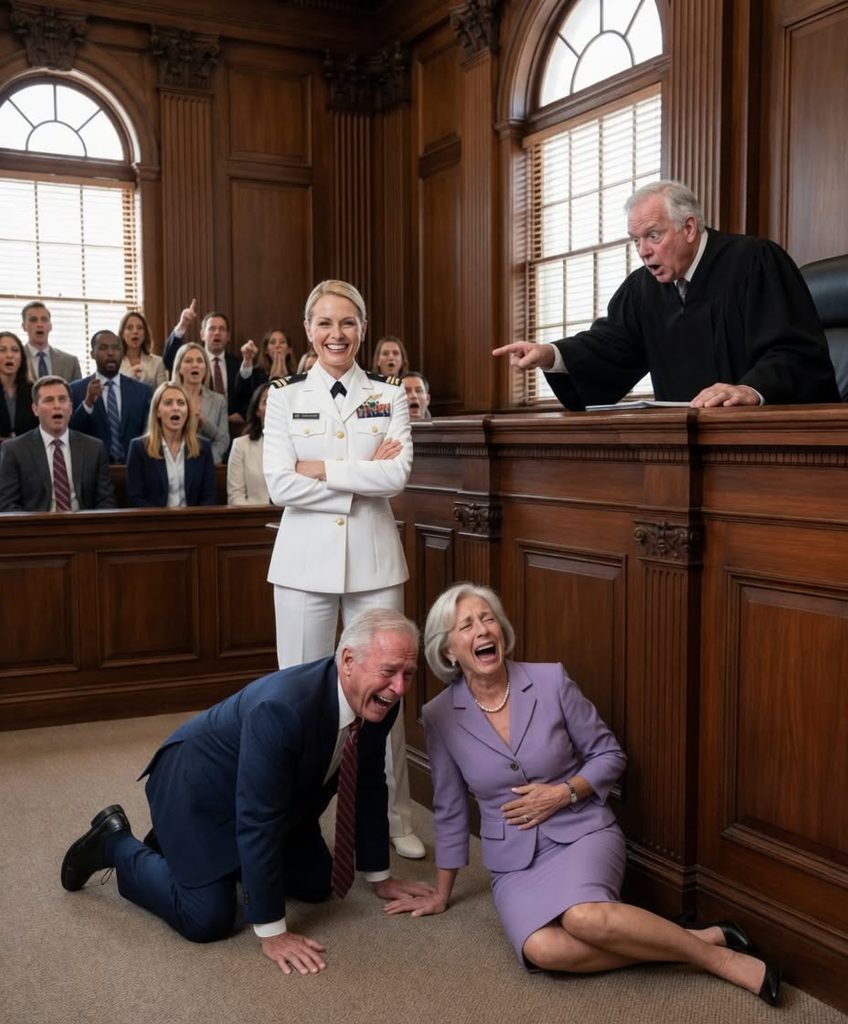
They forgot my birthdays, minimized my career, and told relatives I was difficult whenever I refused to obey.
When I read their court claim alleging I was mentally unfit, something colder than anger settled inside me.
On the day of the hearing, I arrived early in a simple dark suit with no jewelry and no visible rank.
I sat quietly at the defense table with my folders arranged neatly in front of me.
My parents walked in with their high-priced attorney, confidence pouring off them.
My mother scoffed loudly when she saw me sitting alone without a lawyer.
“She doesn’t deserve a single cent,” my father whispered loud enough for nearby people to hear.
Their lawyer smiled with practiced politeness, convinced this would be an effortless victory.
To them, I was still the compliant daughter they had dismissed and overpowered for years.
The judge entered the courtroom and ordered everyone to take their seats.
My parents’ attorney spoke first, painting me as an unstable daughter who manipulated an elderly woman.
He spoke with total authority, as if my character had already been condemned.
I said nothing, kept my face unreadable, and waited.
The judge began reviewing the official case file page by page.
Suddenly, he stopped on one specific document and stared at it for a long moment.
He looked up from his bench, adjusted his glasses, and looked straight at me.
“Hold on,” the judge said slowly, his voice echoing in the silent room. “You’re JAG?”
PART 2
A heavy silence fell over the courtroom as my parents exchanged confused glances.
“Your Honor,” their lawyer stammered, “my clients’ daughter is an office clerk.”
“She is a Lieutenant Commander in the Navy Judge Advocate General’s Corps,” the judge corrected sharply.
He held up the certified credential page showing my specialization in military probate and elder law.
My mother’s smug smile vanished as she turned to stare at me in complete disbelief.
My father shifted uncomfortably in his chair, his face darkening with anger.
“Furthermore,” the judge continued, “she holds a master of laws in estate litigation from Georgetown.”
Their attorney looked down at his own brief, realization dawning on him that he had been woefully misinformed.
My father leaned forward and argued that military titles didn’t change family obligation.
“Silence,” the judge warned, slamming his gavel down once.
“You accused a senior military legal officer of mental incompetence without providing a single piece of medical evidence.”
The judge flipped to the next exhibit in my file and shook his head.
It was a high-definition video recording certificate from my grandmother’s estate execution.
My grandmother had insisted on a full psychiatric evaluation and video notary six months before her passing.
In the video, she explicitly stated she was cutting off my parents due to their years of greed and emotional neglect.
I stood up calmly from the defense table and smoothed my jacket.
“Your Honor, I would like to submit Exhibit C to the court record,” I stated in a clear, measured voice.
PART 3
I walked forward and handed three bound blue folders to the court clerk.
“Exhibit C contains forensic bank audits from the past five years,” I announced to the court.
My parents’ attorney opened his copy, and his face turned ghostly white as he scanned the ledgers.
The records proved that my parents had secretly siphoned three hundred fifty thousand dollars from my grandmother’s savings.
They had forged her signature on monthly checks to fund my brother’s sports car and my sister’s luxury apartment.
When my grandmother discovered the theft, she had asked me to secure her estate legally.
That was why she left every dollar to me, knowing I would protect her legacy and hold them accountable.
My mother gasped, grabbing her lawyer’s sleeve and begging him to say something.
“Your Honor,” the attorney said, stepping back from the bench. “I was not made aware of these financial records.”
“I request to immediately withdraw as counsel for the plaintiffs due to material misrepresentation by my clients.”
My father stood up, red-faced and furious, shouting that I had set a trap for my own family.
The judge struck his gavel hard three times, filling the room with sharp cracks.
“Mr. Miller, sit down before I hold you in summary contempt of court,” the judge barked.
The judge looked down at the bank statements, his expression hardening into cold disgust.
“This isn’t just a frivolous estate contest,” the judge declared.
“This is evidence of felony grand larceny and elder financial exploitation.”
He turned to the court clerk and ordered the county prosecutor’s office to be notified immediately.
PART 4
The judge formally dismissed my parents’ lawsuit with prejudice, ensuring they could never contest the will again.
He ordered my parents to pay all court costs and full legal fees incurred during the proceedings.
Two county sheriff deputies entered the courtroom and escorted my parents into an adjoining room for questioning.
My mother wept hysterically, calling out my name and begging me to drop the financial investigation.
My father walked past me in silence, unable to meet my eyes now that his power was completely broken.
My siblings tried calling my phone repeatedly that afternoon, panicking as their funded lifestyles collapsed.
I did not answer a single call, finally closing the door on a family that only valued me when they wanted something.
Within three months, my parents were formally indicted for grand theft and financial fraud.
I used two million dollars of the inheritance to establish a foundation offering legal protection for vulnerable seniors.
The remaining funds were placed in a trust to preserve my grandmother’s historic estate.
A week after the trial, I visited my grandmother’s favorite garden bench beneath the old oak tree.
I sat in the quiet afternoon breeze, holding her silver pocket watch in my hand.
I had never needed my parents’ approval or their empty praise.
I had my grandmother’s trust, my own honor, and a life built on my own terms.
No Comments yet!