The battle over what lands on the American dinner plate has officially reached a boiling point, pitting the timeless tradition of independent agriculture against the high-stakes ambitions of corporate bio-laboratories. At the center of this cultural and economic clash is a fundamental question of what constitutes genuine nutrition, as everyday citizens increasingly demand real food over artificial, industrial experiments.
For generations, real food has come from open pastures, sunlit ranches, and rich soil worked tirelessly by American producers who raise livestock the natural way. These dedicated ranchers and farmers represent the bedrock of the national food supply, stewarding the land with proven, time-tested methods that have sustained families across the country for centuries.
In sharp contrast to this agrarian heritage stands the rising push for lab-grown meat alternatives, manufactured inside sterile, industrial bioreactors using complex and unproven biological processes. Rather than relying on nature, sunlight, and honest field labor, these synthetic substitutes emerge from chemical vats engineered to mimic the texture and appearance of authentic animal protein.
Critics and consumer advocates increasingly point out that this push represents far more than just a culinary curiosity; it marks a concentrated effort to consolidate corporate control over the global food chain. By shifting production away from independent pastures and into centralized manufacturing facilities, distant corporate interests threaten to monopolize the very fuel that sustains human life.
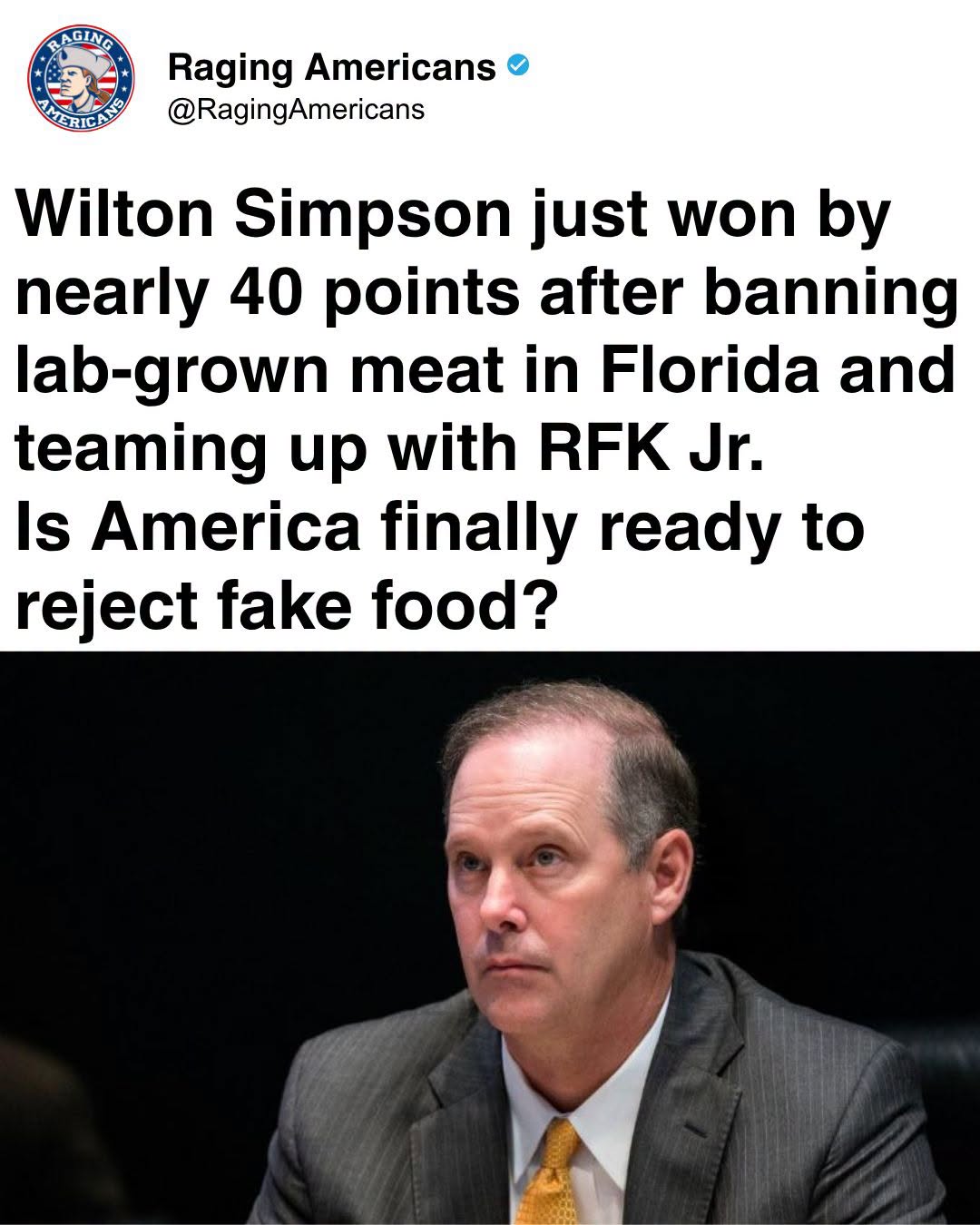
This escalating tension came to a dramatic head in Florida, where state leadership took a decisive and historic stand to protect traditional livestock production by outlawing lab-created meat products. Recognizing the grave threat posed to local agriculture, officials drew a firm line in the sand, rejecting experimental substitutes pushed by out-of-touch corporate lobbies.
Standing Up for Real Food and American Producers
The political response from the public was both swift and undeniable, as voters overwhelmingly rewarded the leadership that stepped forward to defend traditional agriculture. The sweeping support demonstrated that everyday citizens are paying close attention to what happens to their food supply, and they refuse to let corporate laboratories dictate their dietary future.
Standing firmly with the voices that question heavily processed and synthetic food sources resonates deeply across the country because everyday families value basic honesty and transparency above all else. Parents want absolute certainty about the food they serve at their tables, and they are rightfully skeptical of novel concoctions born under fluorescent factory lights.
For decades, conventional farming has operated on open principles that consumers understand, respect, and trust from pasture to plate. Banning lab-created concoctions directly defends that hard-earned trust, ensuring that dietary standards remain firmly anchored in nature rather than surrendered to opaque corporate formulas whose long-term biological effects remain completely unknown.
Observers note that the widespread skepticism surrounding manufactured meat is rooted in basic common sense and a respect for natural biology. Introducing novel, heavily manipulated cell cultures into the human diet without generations of safety data poses questions that slick corporate marketing campaigns simply cannot answer.
When consumers are forced to choose between the proven, nutrient-dense power of genuine livestock and an untested laboratory novelty, the overwhelming majority choose the real thing every single time. Real meat provides authentic nourishment that has fueled human achievement for millennia, making synthetic imitations appear both unnecessary and fundamentally inferior.



Beyond the undeniable health considerations lies an urgent economic reality that impacts thousands of working-class families across rural America. The aggressive promotion of synthetic meat poses an existential threat to the livelihoods of cattlemen, ranchers, and agricultural workers who form the backbone of local economies.
If industrial mega-facilities are allowed to undercut conventional farming with mass-produced artificial substitutes, multi-generational family ranches could be permanently wiped off the map. Defending real meat is not merely a matter of culinary preference; it is a vital defense of American economic independence and rural heritage.
When independent producers are driven out of business, the entire country loses a crucial buffer of decentralized food security, leaving everyone vulnerable to supply shocks and corporate price manipulation. Protecting local producers keeps power distributed in the hands of hard-working citizens rather than concentrated in the boardrooms of a few conglomerate gatekeepers.
A Resounding Mandate at the Ballot Box
The remarkable electoral margins witnessed in Florida sent shockwaves through the synthetic food industry, delivering an unmistakable message that cannot be ignored. The public’s decisive rejection of engineered food substitutes proves that the push for artificial diets is a top-down agenda completely disconnected from the desires of ordinary people.
Voters made it abundantly clear that they will actively support leaders who have the courage to confront powerful corporate lobbies and protect foundational traditions. When government officials act decisively to keep the meat supply uncompromised, they restore public faith in the integrity of both the market and the regulatory system.
This powerful mandate demonstrates that citizens understand the profound stakes of this modern agricultural struggle. Prioritizing what has reliably sustained countless generations over unproven corporate novelties is a matter of common-sense survival, national pride, and economic stability.
The momentum sparked by this decisive action is now inspiring similar conversations across the entire nation, as more states begin questioning the unchecked rise of lab-grown alternatives. Communities everywhere are waking up to the reality that their food sovereignty is worth fighting for, and they are demanding bold protections for their local farmers.
There is an enduring, sacred connection between the American people and the natural land that feeds them—a bond that no corporate bioreactor could ever replicate. Traditional ranching honors the rhythm of nature, demands relentless personal dedication, and yields a genuine product that synthetic manufacturing will never match.
As the push for artificial, lab-grown food continues to expand, the resolve of traditional producers and informed consumers will only grow stronger and more united. The battle lines have been drawn clearly between natural heritage and industrial experimentation, and the American public has already chosen where it stands.
Protecting the integrity of what we eat is the ultimate commitment to the health, freedom, and prosperity of future generations. By standing shoulder-to-shoulder with our ranchers and rejecting synthetic substitutes, the American people are ensuring that real food—grown on real land by real producers—remains the enduring standard for our nation.
No Comments yet!