The lawyer’s name was Margaret Whitfield, and she called me the same afternoon they walked me out of the building.
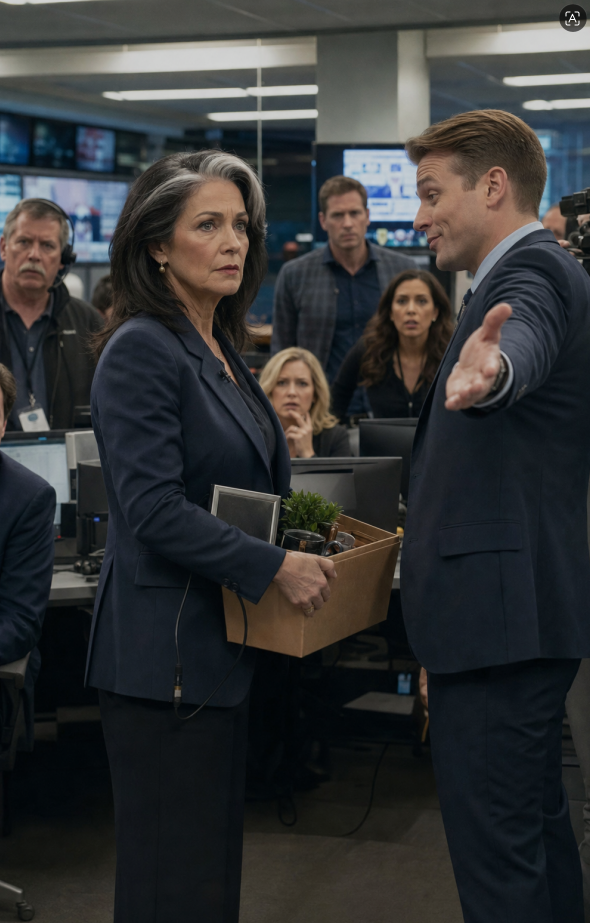
I almost didn’t answer. I was sitting in my car in the station parking lot with a cardboard box on the passenger seat — a coffee mug, a framed photo, thirty-one years of a career reduced to something I could carry in two hands. They’d cut my mic in the middle of a live segment. Not after. During. The new general manager had wanted it to be public, wanted the market to see the old anchor put down like a horse with a bad leg, so no one would fight when the rest of the changes came.
“They said I’d never work in this market again,” I told the empty car. I actually said it out loud. Fifty-four years old, and the last thing my bosses gave me was a threat.
So when the phone rang and a woman said she was calling on behalf of the estate of Harold Brennan, I nearly let it go to voicemail. Then the name landed.
Harold Brennan. Mr. Brennan. The man who’d built our station from a single AM transmitter in the sixties, who’d hired me as a twenty-three-year-old nobody, who’d sold the place a decade ago and then, when his health went, spent his last two years in a care facility that his own family rarely visited.
I visited. Not for any reason I could’ve explained at the time. He’d been good to me when no one had a reason to be, and I couldn’t stand the thought of him sitting alone in there. So on my days off I’d bring him the coffee he liked and we’d watch old broadcasts and he’d tell me stories about the early years. I did it for three years. I never told anyone at work. It wasn’t their business, and it wasn’t why I did it.
“Mr. Brennan named you in his will,” Margaret Whitfield said. “There’s a bequest. I’d like you to come in tomorrow, if you’re able.”
I assumed it was money. Maybe a keepsake. I did not sleep that night, not because of the will, but because every time I closed my eyes I heard the sound of my own mic going dead on air.
The next morning I sat in a mahogany conference room and Margaret Whitfield slid a folder across the table.
“Mr. Brennan retained one asset when he sold the station,” she said. “He never transferred it, because at the time the buyers didn’t think they needed it and Harold didn’t think to correct them. It’s the FCC broadcast license for the station’s primary frequency. The physical station changed hands. The license to broadcast on that frequency did not. It remained in a holding entity Mr. Brennan controlled. And he left that entity, in its entirety, to you.”
I remember the room going very quiet, the way a studio goes quiet in the half-second before a hard cut.
“I don’t understand,” I said.
She explained it the way you explain something to a person in shock, slowly and more than once. The corporation that had just fired me on live television was in the final stages of a merger — a billion-dollar consolidation that folded our station into a national group. And that merger, every filing of it, every regulatory approval, was built on the assumption that the buyer controlled the station’s broadcasting license.
They didn’t. I did. As of Harold Brennan’s death, I held the single piece of paper the entire deal could not close without.
The people who’d cut my mic and told me I’d never work again had, four days earlier, humiliated the one person on Earth who could stop their merger with a signature.
I’d love to tell you I felt triumphant. Mostly I felt Harold in the room with me. I could hear him — that gravel laugh — saying you always did answer the phone for me, Diane.
I called my own lawyer before I did anything else. I wanted to be sure, three times sure, that this was real and clean and mine. It was. Harold had documented it obsessively, the way men of his generation documented everything, precisely because he’d suspected the buyers were careless. He’d left a letter, too. It said, in part: They’ll cut corners. They always do. If you’re reading this, you’re holding the corner they cut. Do what’s right, but don’t let them tell you you’re nothing. You were never nothing.
I did not burn the station down. That’s not who I am, and it’s not who he was. But when the corporate attorneys realized what had happened — when they understood that the anchor they’d fired for spectacle now held their merger by the throat — the tone of every phone call changed overnight.
We negotiated. Quietly, this time. No cameras. The license was licensed to them, on my terms, for a number that will keep me comfortable for the rest of my life. And I made one non-negotiable condition, the only thing I truly wanted: a full retraction of the “never work again” line, in writing, and the reinstatement of every junior producer they’d fired alongside me to cover their tracks. Kids with families. Kids who’d done nothing but work for a man who wanted a clean slate.
The general manager who cut my mic was gone within the year. Not because I asked — I didn’t have to. Boards don’t keep executives who nearly torpedo a billion-dollar deal by humiliating the wrong woman on live television.
I don’t anchor anymore. I chose not to. But I own a piece of the airwaves I spent thirty-one years speaking into, and every month a check arrives that traces back to a lonely man in a care facility who never forgot the young reporter he took a chance on, and who was repaid with three years of coffee and company he’d stopped expecting from anyone.
They thought they’d ended me on air. What they actually did was put a camera on the exact moment before Harold Brennan reached out from beyond a will and handed me the one thing they couldn’t buy.
I still have his letter. I keep it in the same box they packed my career into. It reminds me that the people who tell you you’re nothing are almost never the people who know what you’re worth.
Comments are closed.