An explosive security crisis has gripped the border city of Mexicali following urgent federal warnings of imminent cartel attacks. American authorities took drastic measures on Tuesday, immediately ordering government personnel to stay clear of local facilities as violent factions threaten total war against Mexican police forces.
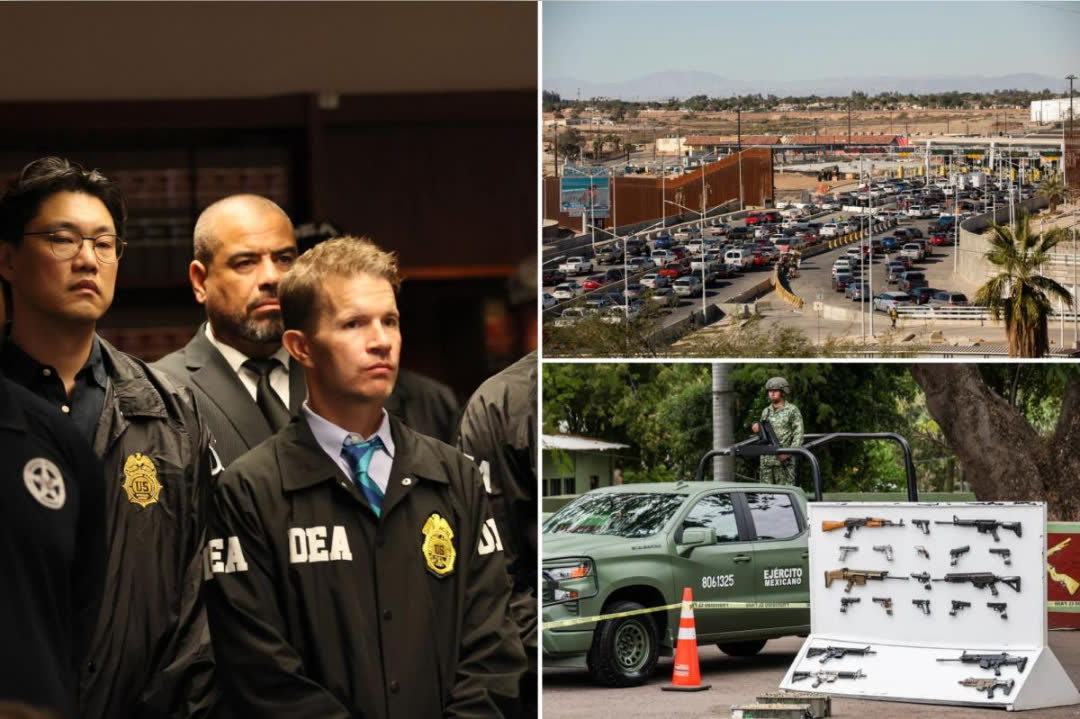
The sudden security lockdown brought official cross-border government operations to an abrupt halt. United States State Department officials officially suspended all government activities in the bustling capital city, completely scrapping planned official travel while warning everyday American travelers to brace for possible violence and seek shelter the moment gunfire erupts.
Intelligence behind this dramatic emergency advisory pointed straight to intercepted communications from Los Rusos, a notoriously ruthless and heavily armed faction operating under the umbrella of the Sinaloa cartel. Sources confirmed that the criminal syndicate issued direct, unapologetic threats promising coordinated bloodshed aimed directly at regional law enforcement installations throughout the city.
The sheer scale of the alert underscores just how volatile the border corridor has become. Rather than a vague advisory, American officials took the rare step of ordering personnel to completely steer clear of regional civic centers and police outposts that are now considered primary targets for cartel retaliation.
Security analysts familiar with the ground reality say this latest escalation represents an all-out offensive by organized crime syndicates against state authority. The Los Rusos faction has demonstrated an alarming willingness to take on government forces in broad daylight, transforming standard municipal streets into potential active combat zones.
Ed Calderon, a Texas-based security consultant and former law enforcement officer for Mexico’s Baja State Police, laid bare the terrifying operational posture of the syndicate. He made it clear that this is not an idle bluff, but an aggressive, coordinated campaign hunting down officers on the ground.
“The Los Rusos faction has been on a rampage, as far as trying to find and execute people that work for state police agencies,” Calderon warned.
The aggressive surge in cartel threats comes as direct vengeance against recent joint crackdowns executed across Baja California. Mexican federal and state forces, working alongside the United States Drug Enforcement Administration, have hammered cartel infrastructure through high-profile, highly disruptive interdiction operations throughout Mexicali.
Among the hardest hits suffered by Los Rusos was a massive counter-narcotics strike in August that seized a staggering 120 kilograms of deadly fentanyl pills. That massive bust delivered a devastating financial and logistical blow to the cartel’s primary trafficking pipelines into American communities.
Rather than retreating, the cartel has answered federal raids with open terror, setting its sights directly on local cops and state police agencies. When organized crime syndicates lose millions of dollars worth of illicit shipments, their immediate response is often asymmetrical violence aimed at terrifying the very officers enforcing the law.
A High-Stakes Border Hub Under Direct Threat
The danger is not contained to uniform-wearing officers alone, because the physical layout of the border city puts innocent civilians in immediate peril. Calderon emphasized that everyday travelers, cross-border shoppers, and staff at American facilities are in serious jeopardy simply because of their proximity to Mexican administrative and police offices.
In border cities like Mexicali, municipal departments, police headquarters, and diplomatic or government properties are often clustered within the same busy districts. A coordinated strike targeting a local police agency could instantly ensnare anyone walking nearby, leaving innocent commuters and foreign visitors caught in violent crossfire.
The timing of the cartel threat strikes at the very heart of Mexicali’s identity as a vibrant, highly frequented border capital. Situated right across the boundary line from Calexico, California, the bustling city of Mexicali serves as the proud political and economic capital of Baja California.
Millions of Americans regularly travel south through the checkpoint to immerse themselves in Mexicali’s unique culture and famous desert adventures. The city is internationally renowned for its rich Chinese-Mexican culinary traditions, alongside a thriving medical tourism sector that draws thousands seeking affordable healthcare.
 Over 50 Charges Uncovered: Inside the Massive Louisiana CSAM and Voyeurism Arrest Rocking Iberville Parish
 Iowa Teen Drakona Lee Clark Faces Attempted Murder Charges After Alleged Shooting Inside Family Home
 Keys to the Face, Thrown Knives, and Death Threats: How an Arkansas Domestic Fight Exploded into Pure Chaos
The volume of civilian movement across this boundary is staggering by any global metric. Official records from the Bureau of Transportation Statistics reveal that the Calexico-Mexicali border crossing sees more than 5.4 million personal vehicles and over 3.1 million pedestrians every single year.
That constant stream of regular commuters, family members, and vacationers now faces an unsettling security environment where regular routines could place them near ground zero of a cartel ambush. The sheer density of people flowing across the port makes public warnings vital to preventing disastrous collateral casualties.
In response to the mounting danger, the United States Embassy in Mexico dispatched an urgent bulletin on Monday night alerting citizens to the active hazard. The embassy urged all Americans in Mexicali to closely monitor local media reports, maintain heightened situational awareness, and establish clear emergency check-in plans with family back home.
At the center of this borderland storm is the enigmatic and heavily hunted figurehead behind the violent cell, Juan José Ponce Félix, universally known by his underworld alias, “El Ruso.” His faction has maintained a brutal grip over local trafficking routes while waging relentless war against rivals and authorities alike.
Law enforcement on both sides of the international boundary has placed Los Rusos directly in their crosshairs. The United States Department of Justice and the DEA have formally posted a massive $5 million bounty for information that leads directly to the capture and arrest of Félix.
Federal indictments paint an unvarnished picture of a prolific narcotics kingpin orchestrating massive transnational smuggling pipelines. Félix stands accused of flooding American streets with massive quantities of illicit fentanyl, methamphetamine, cocaine, and heroin, funding a violent private army in the process.
Intensified Enforcement and High-Level Political Fallout
Beyond massive drug smuggling, the Los Rusos syndicate functions through sheer intimidation, heavy weapons smuggling, violent tactical strikes, and brazen kidnappings. Their ability to acquire military-grade firepower has turned the regional struggle between law enforcement and cartel operators into an increasingly deadly standoff.
The brazen warnings issued by Los Rusos forced immediate high-level political reactions in Mexico City. During her regularly scheduled morning press briefing on Tuesday, Mexican President Claudia Sheinbaum addressed the alarming security development directly before the national press corps.
President Sheinbaum acknowledged the gravity of the intelligence, confirming that federal authorities received notice regarding the active threat profile in Mexicali. She noted that the security alert was rooted directly in actionable intelligence sharing provided by United States law enforcement agencies operating across the border.
While confirming the underlying alert, Sheinbaum moved to project institutional stability and reassure the public that state machinery remains fully deployed to counter any sudden cartel offensive. She emphasized that federal and state forces are keeping a tight grip on surveillance across the border hub.
“There is no further information about what this alert could involve, but simply to remain alert and maintain surveillance in Mexicali,” President Sheinbaum stated during her morning briefing.
Despite official reassurances, the reality on the ground remains intensely precarious for everyone navigating the border landscape. When an international embassy orders its staff to halt official travel and avoid public buildings, it sends a clear signal that the danger is both credible and pressing.
The conflict unfolding in Mexicali represents the relentless friction between determined bilateral counter-narcotics task forces and entrenched cartel factions unwilling to surrender their lucrative smuggling corridors. Every major bust, including multi-kilogram fentanyl seizures, shifts the battlefield directly onto local streets.
For the millions of cross-border commuters, medical tourists, and local residents who rely on the Calexico-Mexicali corridor, daily life continues under the dark shadow of cartel retribution. As security forces maintain a razor-sharp defensive posture, authorities continue urging maximum caution, reminding travelers that in the volatile realm of cartel warfare, a routine trip can instantly become a fight for survival.
No Comments yet!